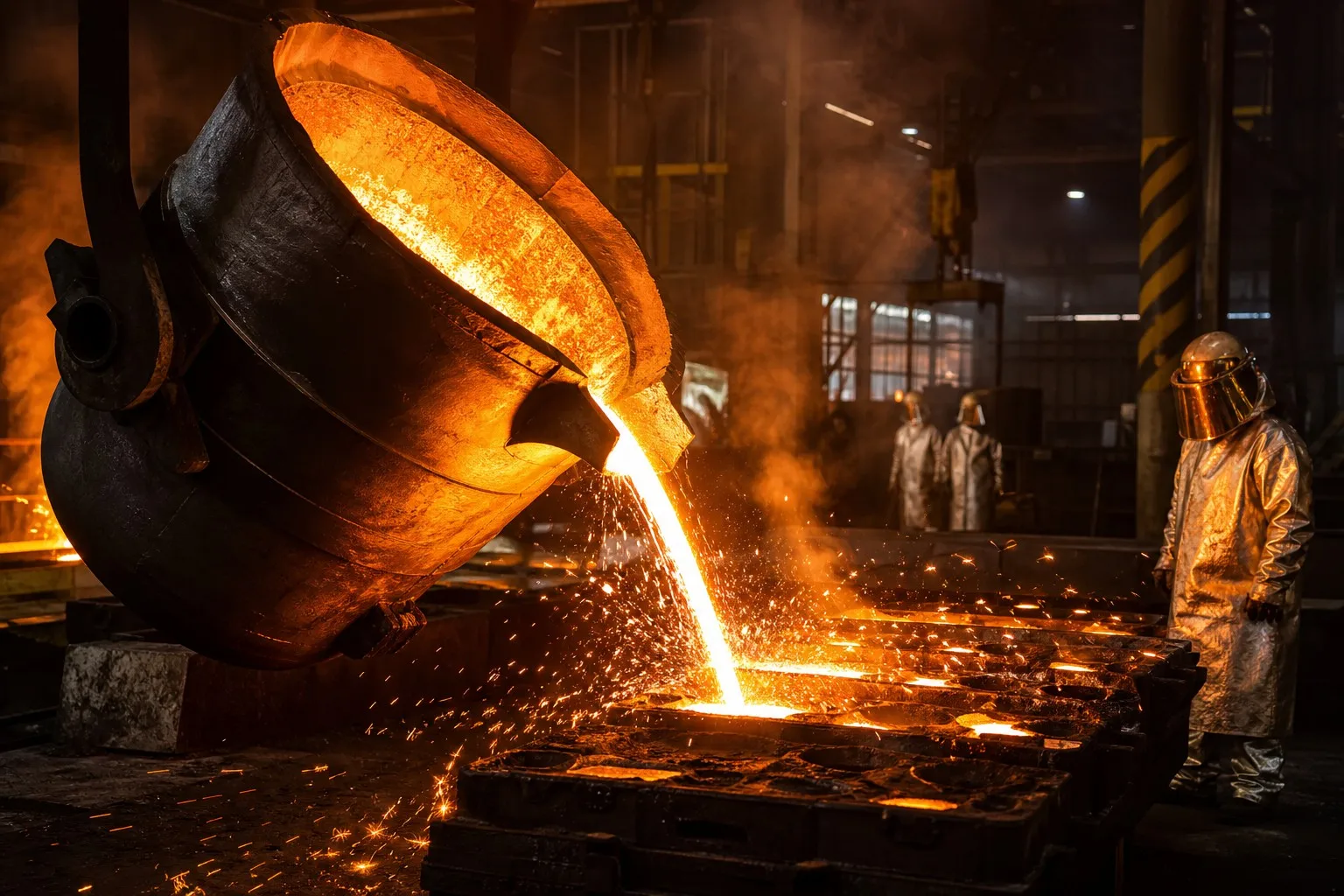
From Casting to Precision Component: How CNC Machining Elevates Metal Casting Quality
2026-06-20
Meta Description: Discover how CNC machining transforms rough metal castings into high-precision industrial components. Learn about processes, tolerances, material compatibility, and how to choose a foundry with integrated machining capabilities.
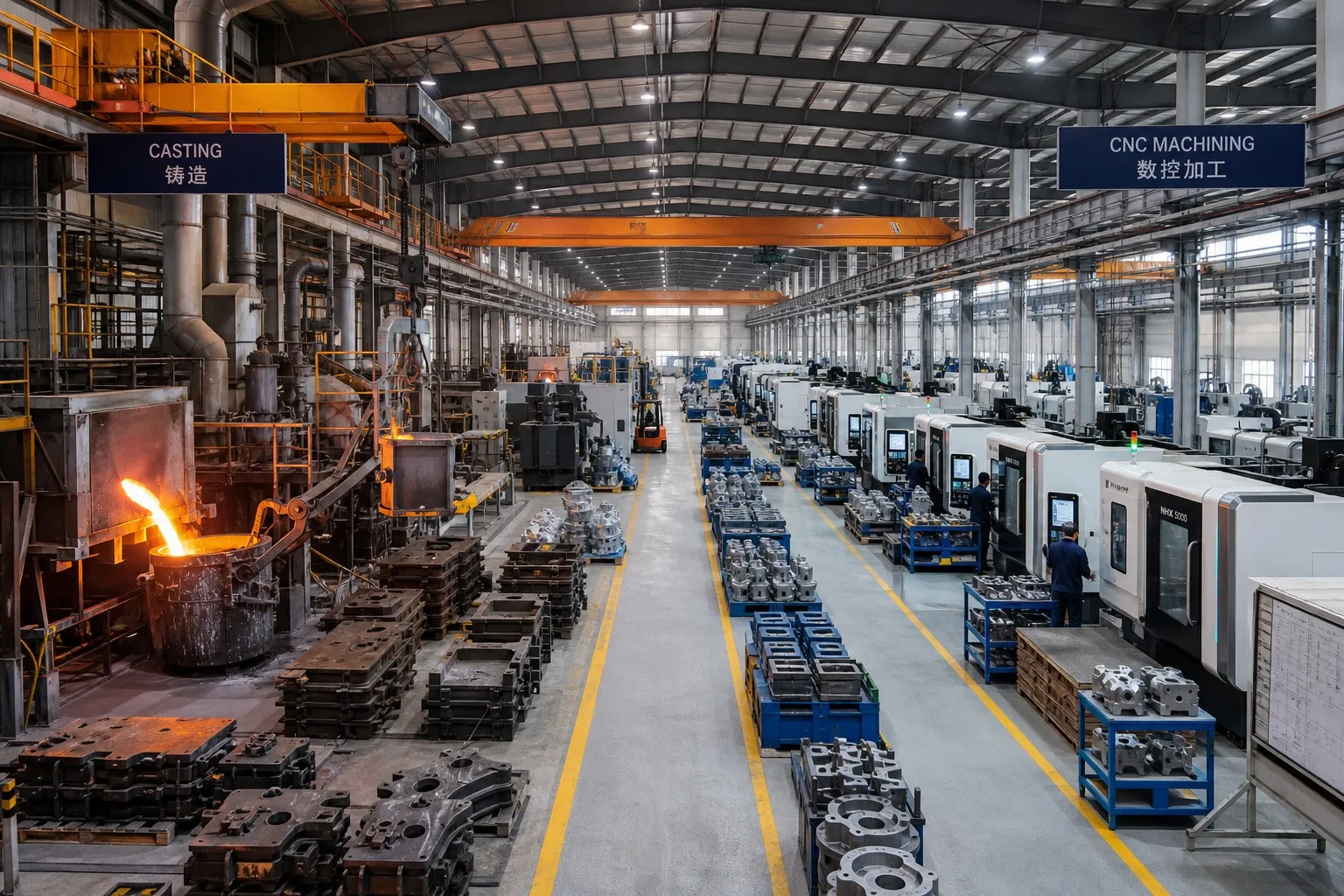
Casting alone rarely delivers a finished part. Whether produced through sand casting, investment casting, or shell mold casting, raw castings almost always require secondary machining to achieve the dimensional accuracy, surface finish, and functional features that modern engineering demands. This is where CNC machining for metal castings becomes essential — bridging the gap between as-cast geometry and a production-ready component.
In this comprehensive guide, we will explore how precision CNC machining enhances metal casting quality across multiple industries, what processes are commonly used, how tolerances and surface finishes are achieved, and what to look for when selecting a foundry with integrated machining capabilities.
Why Metal Castings Need CNC Machining
Even the most advanced casting processes have inherent limitations. Understanding these limitations helps explain why machining is a necessary downstream step.
The Reality of As-Cast Parts
The Cost Equation
A common misconception is that adding machining steps increases total cost. In practice, combining casting with in-house CNC machining often reduces overall part cost because:
- Near-net-shape casting minimizes raw material waste compared to machining from solid billet.
- Integrated workflow eliminates transportation, third-party markups, and quality handoff risks.
- Reduced lead time when both processes are managed under one roof.
For complex geometries, the alternative — machining entirely from bar stock or plate — can produce 60–80% material waste. Casting plus finish machining typically generates less than 15% material waste by comparison.
CNC Machining Processes for Cast Components
Different casting materials and part geometries call for different machining strategies. Here are the primary CNC processes applied to cast metal parts.
CNC Milling (3-Axis, 4-Axis, and 5-Axis)
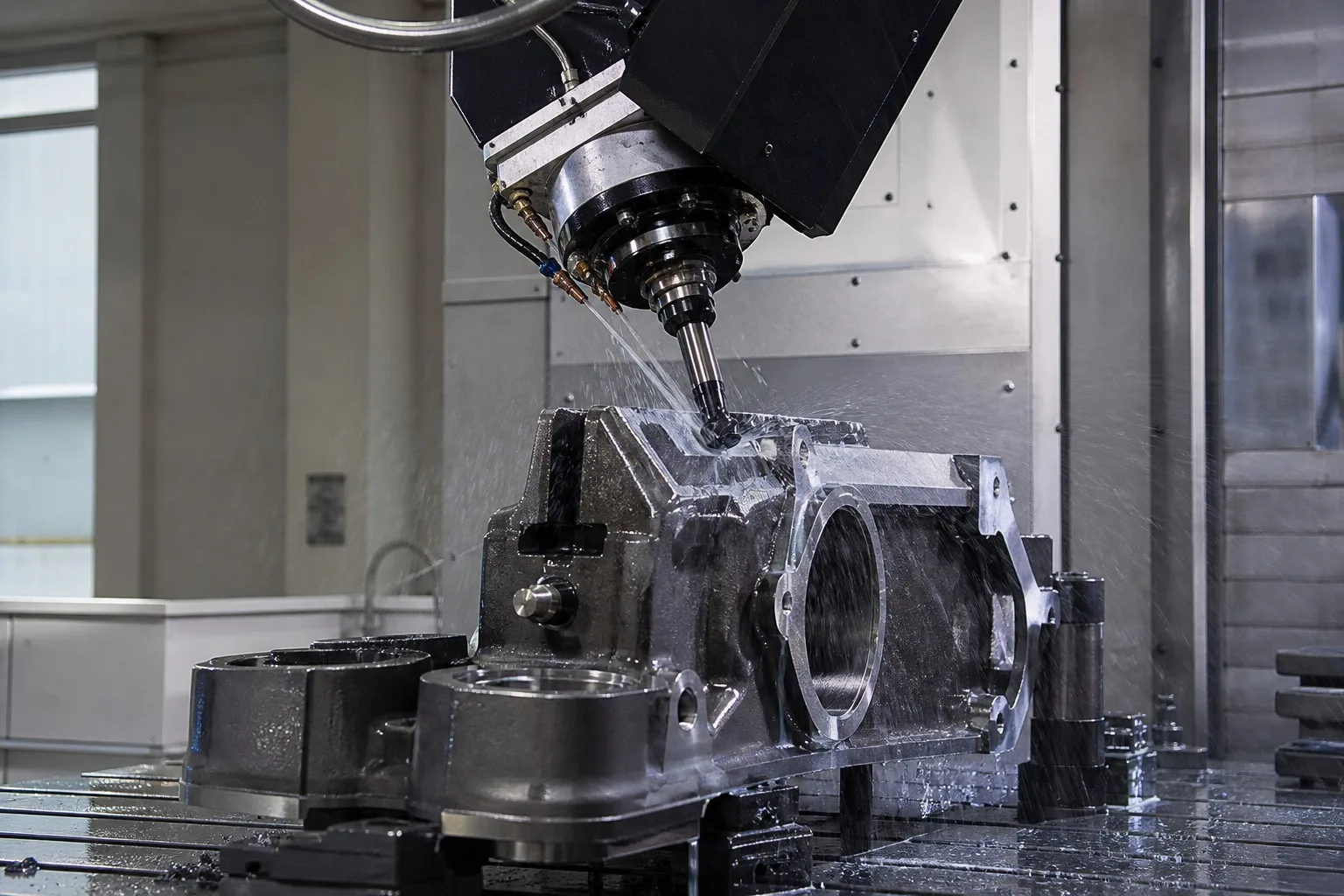
CNC milling is the most widely used machining process for cast components. It excels at creating flat surfaces, pockets, slots, and contoured profiles.
- 3-axis milling: Suitable for flat faces, drilling, and simple pocketing on smaller castings. Ideal for valve bodies, pump housings, and bracket components.
- 4-axis milling: Adds rotary capability for machining features on multiple faces without re-fixturing. Common for manifolds and housings with intersecting bores.
- 5-axis milling: The gold standard for complex castings. Eliminates multiple setups, achieves complex compound angles in a single operation, and is essential for turbine housings, impellers, and aerospace structural castings.
Key advantage for castings: 5-axis machines can machine datum surfaces, bores, and sealing faces in one setup, dramatically improving positional accuracy between features — critical for components like turbocharger exhaust housings, where the turbine inlet flange, wastegate port, and V-band outlet must all align precisely.
CNC Turning
For rotationally symmetrical castings — such as flanges, hubs, pulleys, and bearing housings — CNC turning delivers superior concentricity and surface finish.
- Rough turning: Removes the casting skin and gate residue to establish clean reference surfaces.
- Finish turning: Achieves final dimensions with tight tolerances, often below ±0.01 mm for bearing seats and seal diameters.
- Live tooling: Modern CNC lathes with driven tools can drill, tap, and mill features on cylindrical castings without transferring to a mill, preserving concentricity.
CNC Boring
Large castings — such as slag pot trunnions, gearbox housings, and pump casings — often contain deep precision bores that cannot be efficiently produced by standard milling tools.
- Line boring: Used for bearing housings and split-case components where bores must be precisely aligned across assembled halves.
- Horizontal boring mills: Ideal for large, heavy castings (500 kg to 20,000+ kg) where the part remains stationary and the spindle moves.
Drilling, Tapping, and Thread Milling
Threaded features are nearly impossible to cast with functional accuracy. CNC drilling and tapping operations produce:
- Standard thread forms (Metric M, UNC/UNF, BSP, NPT)
- Thread milling for large-diameter or high-precision threads
- Helicoil and thread insert installation for soft materials like aluminum castings
Surface Grinding
For applications demanding extreme flatness (below 0.01 mm) and surface finish (Ra 0.2 μm or better), surface grinding is the finishing step after milling. Common on:
- Valve body flange faces requiring a pressure-tight metal-to-metal seal
- Pump wear plates and thrust faces
- Gasket sealing surfaces on pressure vessels
Material Considerations for Machining Cast Parts
Not all cast materials machine equally. The metallurgical structure formed during solidification directly affects tool wear, cutting speeds, and achievable surface finish.
Steel Castings