Sand Casting vs. Investment Casting vs. Shell Mold Casting: How to Select the Right Process for Your Industrial Components
2026-07-31
Meta Description: Compare sand casting, investment casting, and shell mold casting on cost, accuracy, surface finish, material range, and production volume. A practical selection guide with decision matrix for engineers and procurement professionals.
The casting process you choose determines more than how the part is made — it determines what the part can cost, how accurately it can be produced, what materials are available, and how quickly you can scale from prototype to production. Selecting the wrong process for your component can add 30–50% to unit cost, extend lead times by weeks, or force design compromises that degrade in-service performance.
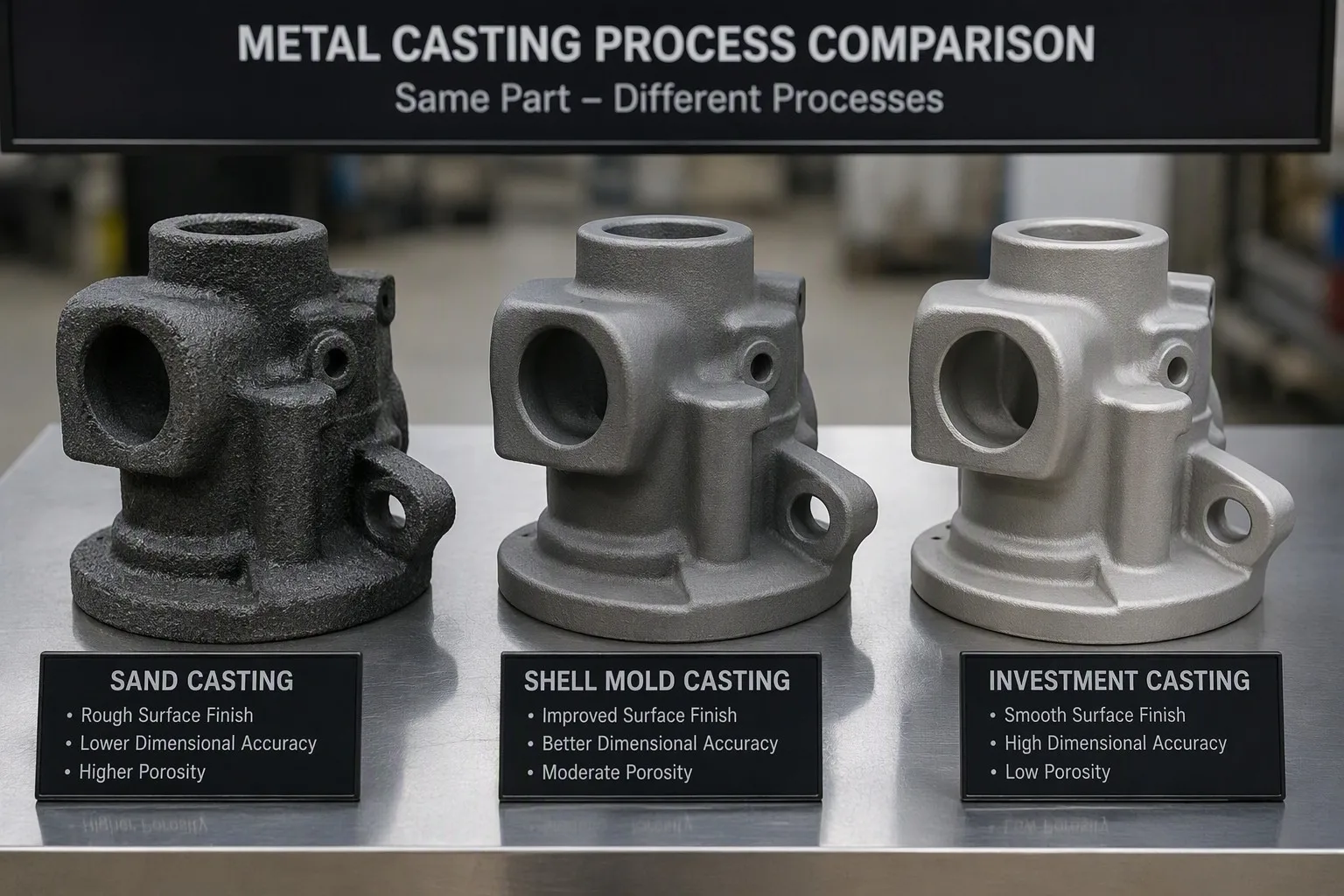
This guide provides a structured comparison of the three most widely used casting processes for industrial components: sand casting, investment casting (lost wax), and shell mold casting. For each process, we examine the technical fundamentals, capability boundaries, cost drivers, and optimal application profiles — culminating in a decision framework that matches component requirements to the right manufacturing method.
Part 1: Process Fundamentals
1.1 Sand Casting
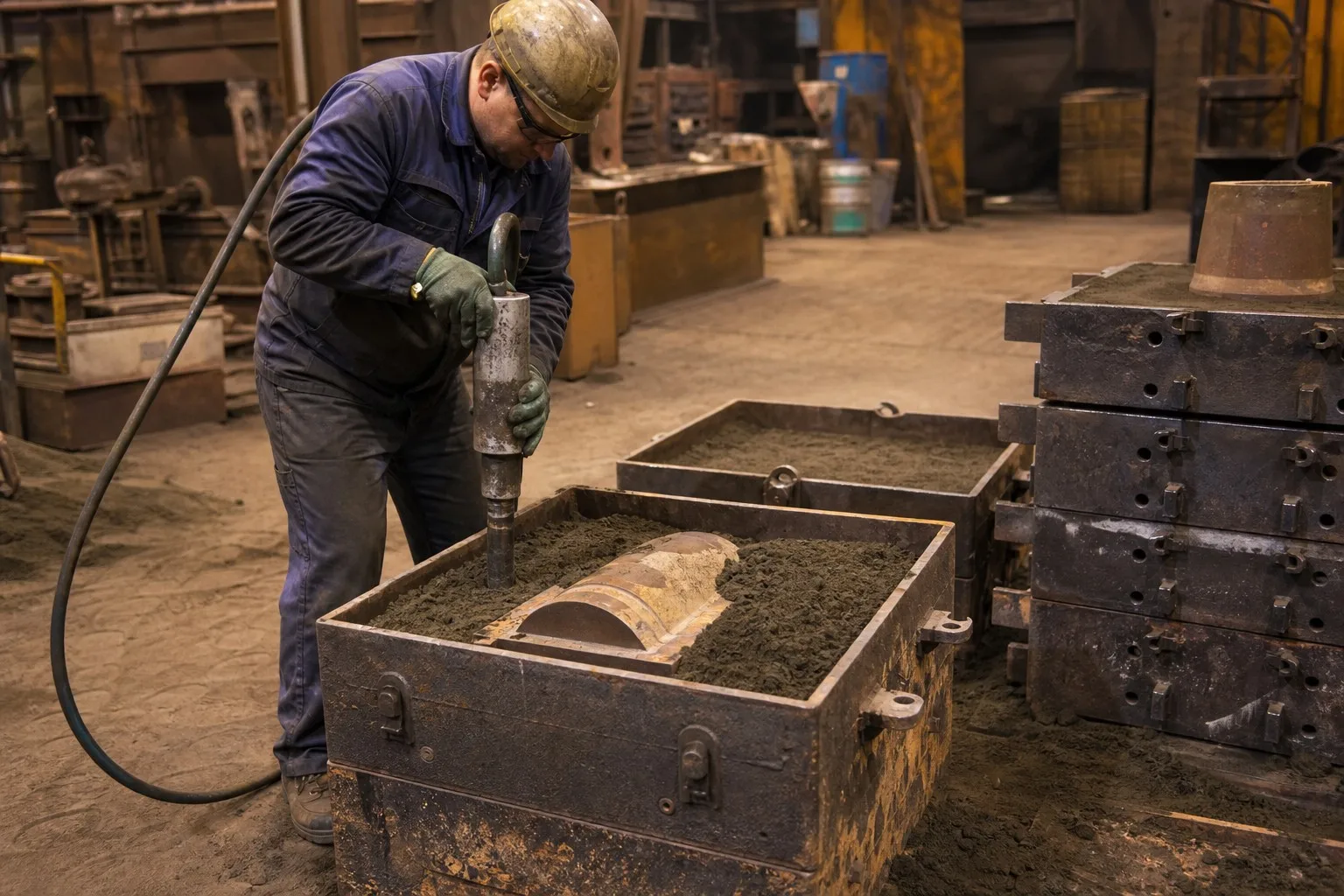
Sand casting is the oldest and most versatile casting process, accounting for approximately 70% of all metal castings produced globally. It uses a refractory sand mold formed around a pattern — the mold is destroyed to remove the casting, making sand casting inherently a one-mold-per-casting process.
How It Works
Key Capabilities
Material Compatibility
Sand casting accommodates the widest range of alloys of any casting process:
- Carbon steels (WCB, WCC, LCB, LCC)
- Low-alloy steels (8630, 4140, 4340)
- Stainless steels (304, 316, duplex, martensitic)
- Manganese steel (Hadfield)
- Gray iron (all grades)
- Ductile iron (all grades, including SiMo and Ni-Resist)
- Nickel-based alloys
- Copper-based alloys (limited)
1.2 Investment Casting (Lost Wax Casting)
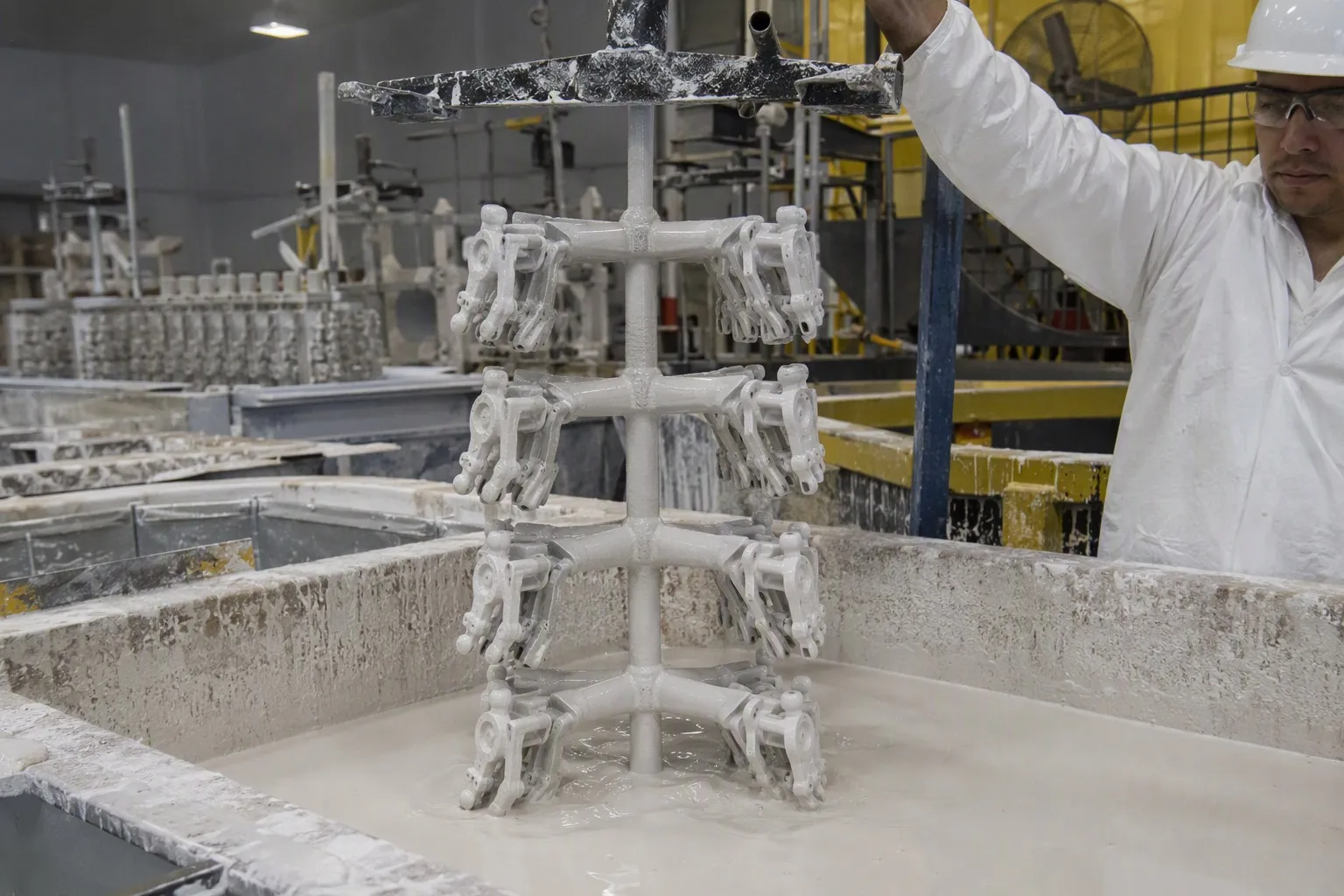
Investment casting produces the highest accuracy and best surface finish among the three processes. It is the method of choice for small-to-medium complex components where near-net-shape production minimizes machining cost.
How It Works